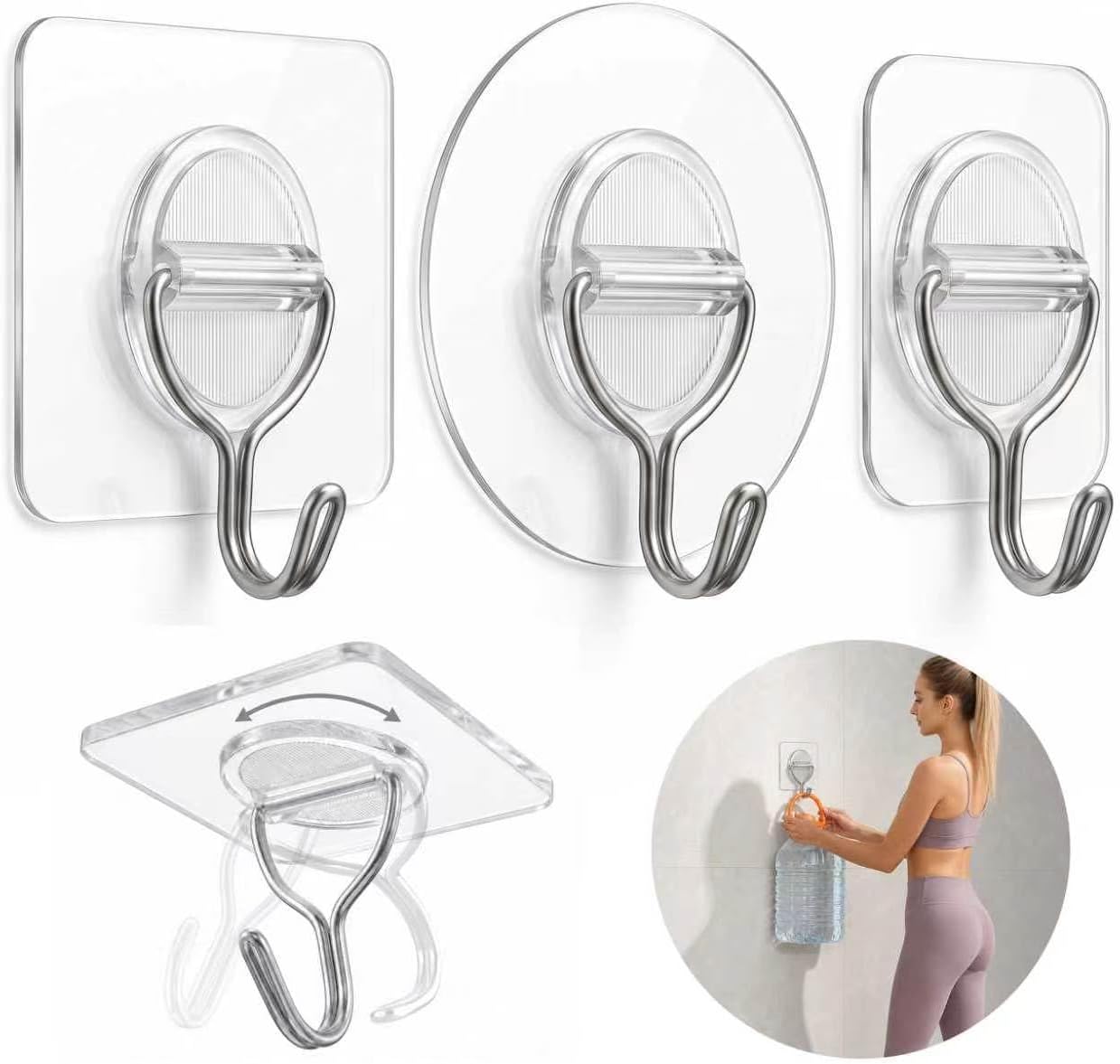
How Much Weight Can Adhesive Hooks Hold
How Much Weight Can Adhesive Hooks Hold
Couldn't load pickup availability
If you're considering an adhesive hook for a handbag, towel, kitchen item, picture, or other household object, the first question is usually simple: how much weight can it hold?
There isn't one weight limit that applies to every adhesive hook. The capacity depends on the specific product and the conditions in which it is used. The hook's stated weight rating is an important starting point, but the surface, installation, load, environment, and frequency of use also matter.
The best approach is to compare the actual demands of your application with the manufacturer's stated capacity rather than choosing a hook based on a number alone.
What Does an Adhesive Hook's Weight Rating Mean?
An adhesive hook's weight rating tells you how much weight the manufacturer indicates the product is designed to support under specified conditions.
That rating should be considered product-specific. Two adhesive hooks with similar appearances may have very different adhesive systems, construction, and stated capacities.
So if you're asking about an adhesive hook weight limit, start with the capacity provided for the particular product you're considering.
Don't assume that a rating from one hook applies to another.
It's also important not to interpret the maximum rating as a promise that the hook will support that amount in every situation. The manufacturer's conditions and installation requirements still apply.
What Actually Determines How Much an Adhesive Hook Can Hold?
The stated capacity is only useful when the hook is being used in an appropriate application.
The Hook and Adhesive System
Different adhesive hooks are designed for different loads and uses. The hook itself, its adhesive, and the area available for contact all contribute to the product's intended capacity.
This is why a lightweight decorative hook shouldn't automatically be treated as equivalent to a product specifically designed for heavier everyday items.
The Mounting Surface
The adhesive needs suitable contact with a stable mounting surface.
Dust, grease, moisture, roughness, or an unstable surface can affect how well the hook performs. A hook that works well on one surface may not perform the same way on another.
The surface therefore needs to be considered when evaluating the practical suitability of a hook.
Installation Quality
Even a hook with a high stated capacity needs to be installed correctly.
The mounting area should meet the product's requirements, and the adhesive should be applied as directed. Loading the hook before the recommended waiting period can also affect performance.
For the complete installation process, see our guide to how to install adhesive hooks.
The Load Itself
Consider what you will actually put on the hook.
A handbag, for example, may be relatively light when empty but considerably heavier after it is filled. The relevant load is the weight during normal use—not just the weight of the item when you first buy it.
Environment
Moisture, humidity, heat, and other environmental conditions can also matter depending on the product.
A hook used in a dry bedroom may experience very different conditions from one installed near a sink or in a humid bathroom.
Always check whether the product is intended for the environment where you plan to use it.
Don't Look at Weight Alone
Weight is important, but it isn't the only thing that determines how demanding an application is.
Static vs. Repeated Use
An object that hangs in one position creates a different situation from an item that is repeatedly removed and replaced.
For example, a hook holding a small bag may be within its stated weight capacity, but taking the bag off several times a day can place repeated stress on the mounting connection.
If the item will be handled frequently, consider that when selecting the hook.
Direction of the Load
How an object pulls on the hook also matters.
An item hanging straight down creates a different loading condition from one that is repeatedly pulled outward or sideways.
This is particularly relevant for hooks used for bags, towels, clothing, or other objects that people regularly grab.
Wet Items
An item's weight can also change during use.
A towel is a simple example. A wet towel may weigh more than it does when dry, while also being handled repeatedly.
When evaluating adhesive hooks weight capacity, consider the conditions under which the hook will actually be used.
How to Choose an Adhesive Hook for Your Intended Load
Choosing the right hook doesn't have to be complicated. Start with the application rather than the hook itself.
First, consider the real weight.
Determine how much the item weighs in the condition in which you intend to use it. For a bag, include its normal contents. For an item that may become wet, consider that as well.
Next, check the hook's stated capacity.
Use the manufacturer's rating for the specific product. Don't rely on a generic number for adhesive hooks as a whole.
Then, consider how the item will be used.
A stationary object is generally a different application from something that is repeatedly pulled, moved, or removed.
Check the mounting conditions.
Make sure the surface, installation method, and environment are appropriate for the product.
Finally, choose a hook intended for the application.
If the load or usage is demanding, look for a product specifically suited to those requirements rather than simply choosing based on appearance.
Everyday Examples: How Much Capacity Do You Need?
The right question isn't always “How many pounds can this hook hold?” It is also “What will this hook actually have to do?”
A hat is generally a lightweight, mostly stationary load, so the primary concern is finding a hook appropriate for the surface and intended use.
A handbag requires more consideration because its weight can change significantly depending on what is inside it. Frequent removal can also create repeated pulling.
A towel may seem lightweight when dry, but moisture changes the load. A bathroom location also introduces humidity and water exposure.
A frequently used kitchen item may not be especially heavy, but repeated pulling and handling can make the application more demanding than a decorative object that simply hangs in place.
For a heavier object, check the specific product's stated capacity carefully and consider whether adhesive mounting is appropriate for the application at all.
These examples aren't universal weight classifications. They are reminders to evaluate the actual use, not just the item's name.
What If Your Item Is Close to the Weight Limit?
If your intended load is close to the hook's stated maximum, don't treat the remaining difference as extra room for error.
First, verify the item's actual weight and the manufacturer's rating. Then check that the surface, installation, and environment meet the product's requirements.
If the application is demanding or the load is close to the stated limit, consider a hook specifically designed for that type of use rather than repeatedly testing a hook at its maximum capacity.
How to Get the Best Performance From an Adhesive Hook
For an adhesive hook to perform as intended, the basic conditions matter:
- Use a suitable mounting surface.
- Clean and dry the area properly.
- Install the hook according to the product instructions.
- Allow the recommended waiting period before loading it.
- Keep the load within the stated capacity.
- Consider moisture, heat, and repeated pulling.
Correct installation is covered in more detail in how to install adhesive hooks.
Choose Based on the Application, Not Just the Number
So, how much weight can adhesive hooks hold? The most accurate answer is: as much as the specific product is designed to support under its specified conditions.
The number on the package matters, but it shouldn't be considered by itself.
Before choosing a hook, look at the item's real weight, how it will be used, the mounting surface, and the surrounding environment. A hook that is appropriate for a lightweight decorative item may not be the right choice for a frequently used bag or a heavier household object.
When those factors match the product's intended use, you're much more likely to choose an adhesive hook that fits the job from the beginning.
Share